
Truck Accident Investigations
In a truck accident investigation, the reconstruction fixes the setting, traces how each vehicle moved, locates the point of conflict, and tests each explanation against the evidence. The questions change with the type of accident.
Evidence by Accident Type
Choose an accident type.
Scene Measurements Distances, marks, positions, and geometry documented at the scene.
Photographs and Video Recordings from the scene, vehicles, or nearby cameras.
Vehicle Condition The state of brakes, tires, lights, and other components.
Electronic Records Event, engine, telematics, or camera data: capabilities vary by vehicle.
Witness Accounts What people report seeing or hearing, with ordinary limits of memory.
Analyst Review A qualified analyst’s methods, assumptions, and conclusions.
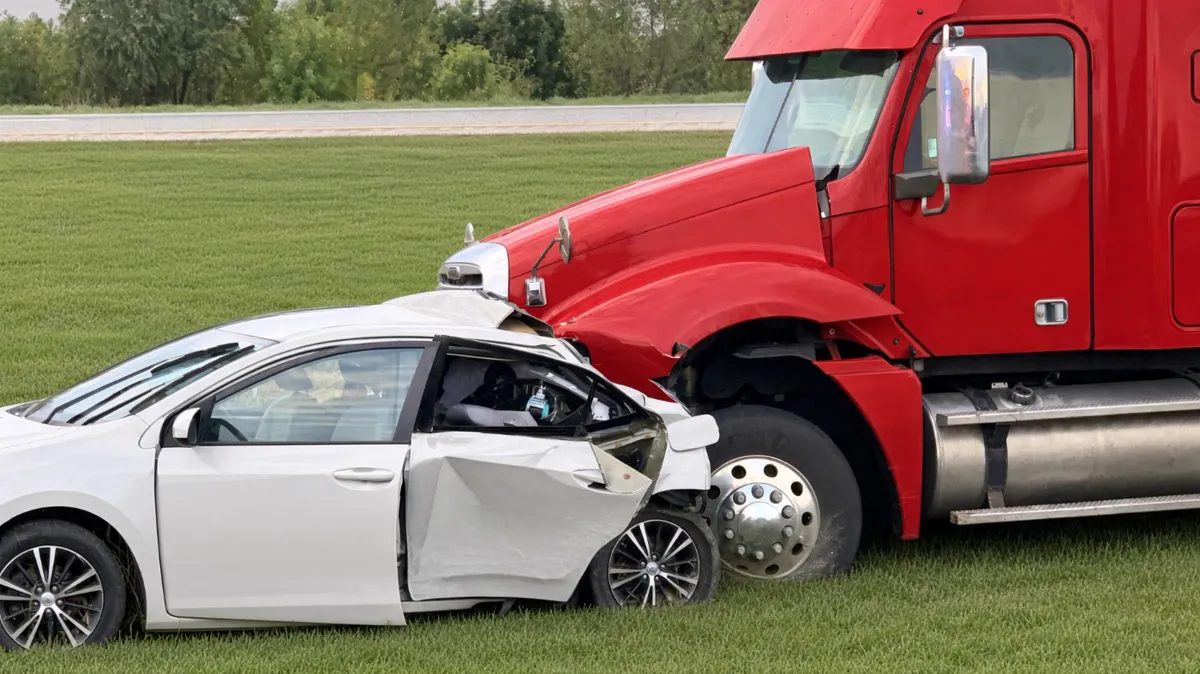
Rear-End
Following-distance event
- Where was each vehicle, in which lane, and under what traffic, light, and weather conditions?
- How were the truck and the vehicle ahead moving: speed changes, spacing, and lane position over time?
- Where did the vehicles first come into conflict, and what physical evidence marks that area?
- What was visible to each driver, when was a response first possible, and what does the braking evidence show?
- Scene Measurements
- Final rest positions, any tire or scrape marks, and lane geometry.
- Photographs and Video
- A recording may show vehicle movement.
- Vehicle Condition
- Brake, tire, and lighting condition on both vehicles.
- Electronic Records
- Heavy-vehicle event data, depending on the specific vehicle and equipment.
- Witness Accounts
- Accounts may describe spacing and timing.
- Analyst Review
- An analyst may model response opportunity and braking.
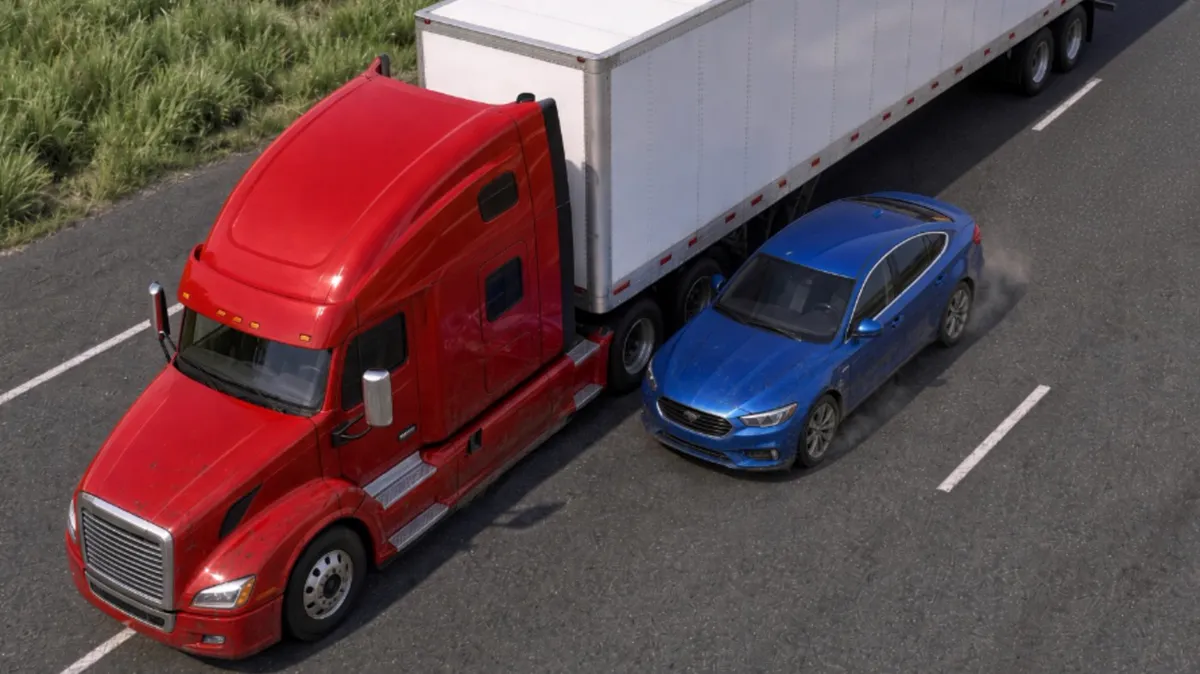
Lane Change
Sideswipe or merge event
- How many lanes, what merge areas, and what traffic density surrounded the maneuver?
- Which vehicle changed lanes, from where to where, and was an indicator used?
- Where did contact occur (side, corner, or wheel area), and what does the damage pattern show?
- What do indicators, mirrors, cameras, and vehicle position data show, and what remains unknown?
- Scene Measurements
- Lane widths, markings, and contact debris.
- Photographs and Video
- Camera coverage may show the merge.
- Vehicle Condition
- Mirror presence and adjustment, plus lighting and conspicuity equipment.
- Electronic Records
- Some fleets record lane or camera events.
- Witness Accounts
- Other drivers may describe the maneuver.
- Analyst Review
- An analyst may evaluate sight lines and timing.
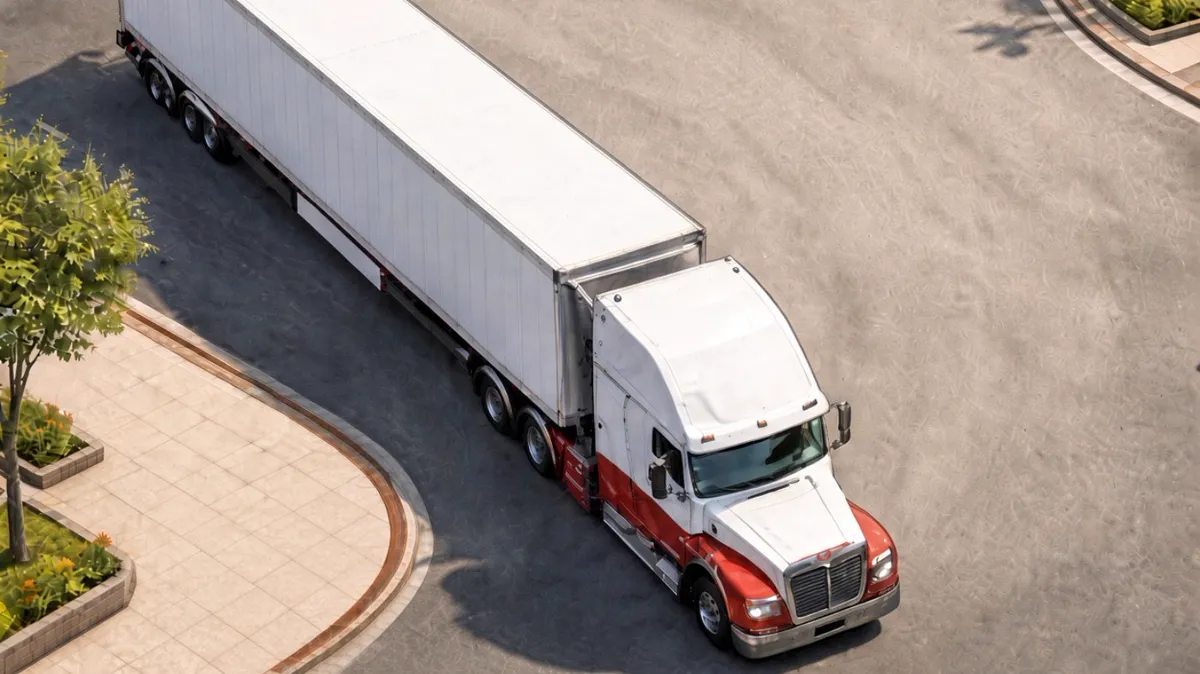
Wide Turn
Turning-path event
- What kind of intersection, lane widths, and surrounding traffic framed the turn?
- Where was the other vehicle or person relative to the swept path of the trailer?
- What do vehicle paths, lane geometry, and surrounding traffic show, and which movements were necessary versus chosen?
- Scene Measurements
- Corner geometry, curb positions, and path measurements.
- Photographs and Video
- Intersection or vehicle cameras may capture path and timing.
- Vehicle Condition
- Steering and coupling condition.
- Electronic Records
- Position data may exist for the truck.
- Witness Accounts
- Accounts of turn signals, positioning, and timing.
- Analyst Review
- An analyst may model the swept path of the specific vehicle combination.
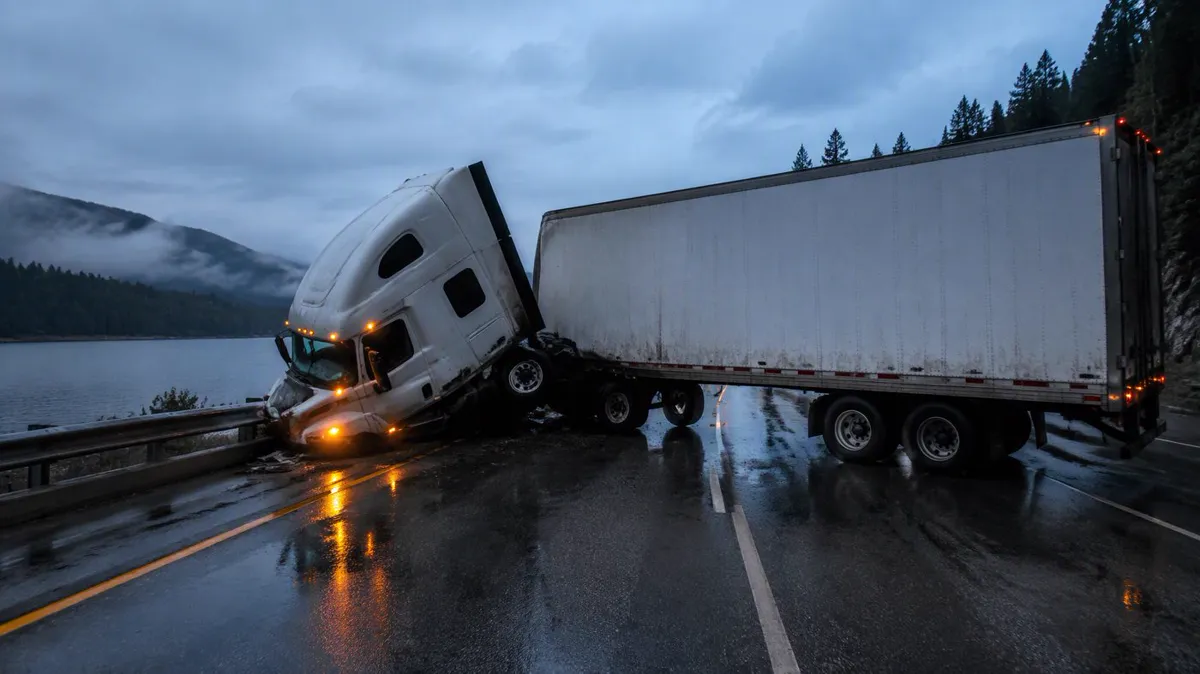
Jackknife
Tractor-trailer alignment event
- What surface conditions (wet, ice, grade), and what traffic surrounded the vehicle?
- How did the alignment between tractor and trailer change over time?
- Where do marks show the wheels traveling, and how does that compare with the vehicle’s final position?
- What do braking evidence, surface conditions, load information, and electronic records show about how the loss of control developed?
- Scene Measurements
- Tire marks, yaw marks, and rest positions.
- Photographs and Video
- Video may capture the onset of rotation.
- Vehicle Condition
- Brake condition and adjustment across the axles, along with tires and load securement.
- Electronic Records
- Some vehicles record brake or stability events.
- Witness Accounts
- Accounts may fix the sequence relative to other traffic.
- Analyst Review
- An analyst may model braking, friction, and load effects.
Rollover
Stability event
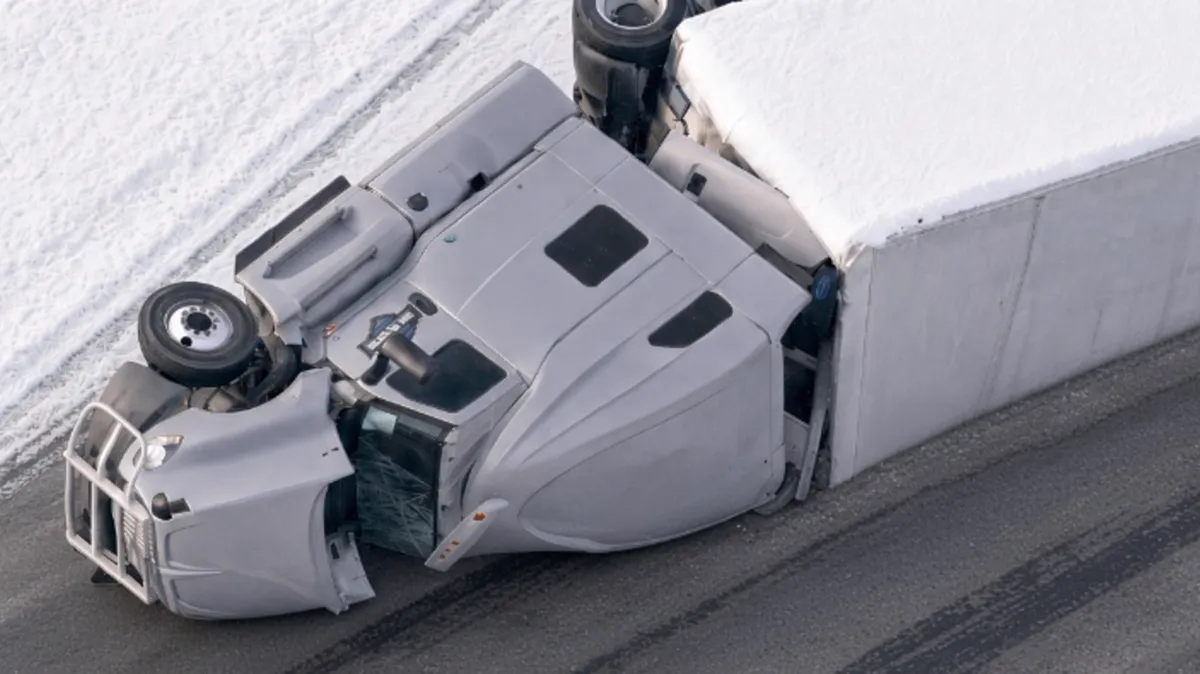
- Was the vehicle on a curve, ramp, or slope, and what was the load?
- What steering and speed inputs preceded the roll, and how did the trailer behave?
- Where do marks show the wheels leaving their path, and where did the vehicle come to rest?
- What do path and steering evidence, load position, roadway geometry, and vehicle condition each contribute, and what stays uncertain?
- Scene Measurements
- Curve radius, superelevation, marks, and rest position.
- Photographs and Video
- Ramp or roadside cameras sometimes capture the onset.
- Vehicle Condition
- Suspension, tires, brakes, and load securement.
- Electronic Records
- Some systems record stability or rollover events.
- Witness Accounts
- Accounts may describe sway or load shift before the roll.
- Analyst Review
- An analyst may model stability using vehicle, load, and geometry inputs.
Underride
Vehicle-geometry event
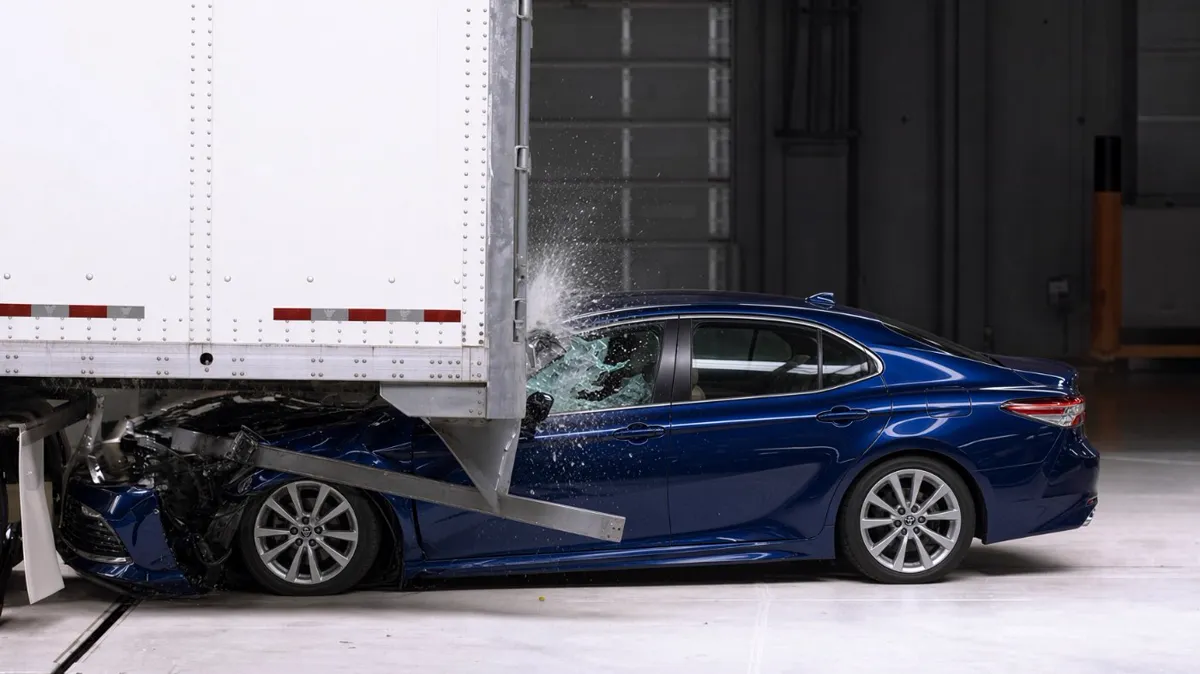
- What lighting, weather, and traffic framed the encounter, and which vehicle moved into which path?
- What were the relative speeds and positions of the two vehicles?
- How did the smaller vehicle’s geometry interact with the truck’s structure?
- What do scene measurements, guard condition, lighting and conspicuity, and the contact sequence show about how the vehicles came together?
- Scene Measurements
- Precise scene and vehicle measurements.
- Photographs and Video
- Recordings may show lighting and movement.
- Vehicle Condition
- Underride guard condition, rear lighting, and conspicuity markings.
- Electronic Records
- Event or camera data from the truck.
- Witness Accounts
- Accounts of lights, signals, and movement.
- Analyst Review
- An analyst may reconstruct the contact sequence and evaluate conspicuity.
Braking Event
Hard-braking or brake-condition event
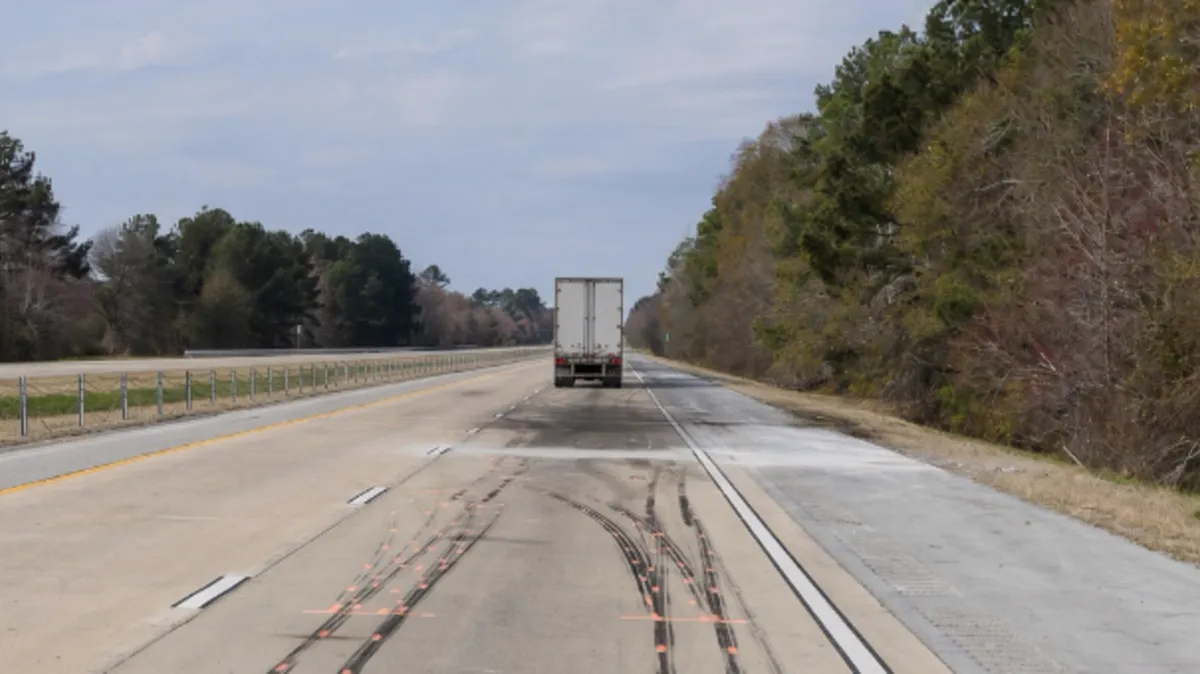
- What road surface, grade, and load was the vehicle working with?
- When did braking begin relative to the hazard, and how did the vehicle respond: straight, pulling, locking?
- What do marks, vehicle damage, and electronic records show about brake application and timing?
- What do brake condition, electronic records, road surface, and timing analysis each establish, and where do they disagree?
- Scene Measurements
- Mark length and location, measured against the surface and grade.
- Photographs and Video
- Video may bracket the braking window.
- Vehicle Condition
- Brake condition, adjustment, and component history.
- Electronic Records
- Engine or event data may include brake-related parameters.
- Witness Accounts
- Accounts may fix when braking started relative to other events.
- Analyst Review
- An analyst may evaluate stopping performance.
Unsecured Load
Shifted or spilled cargo event
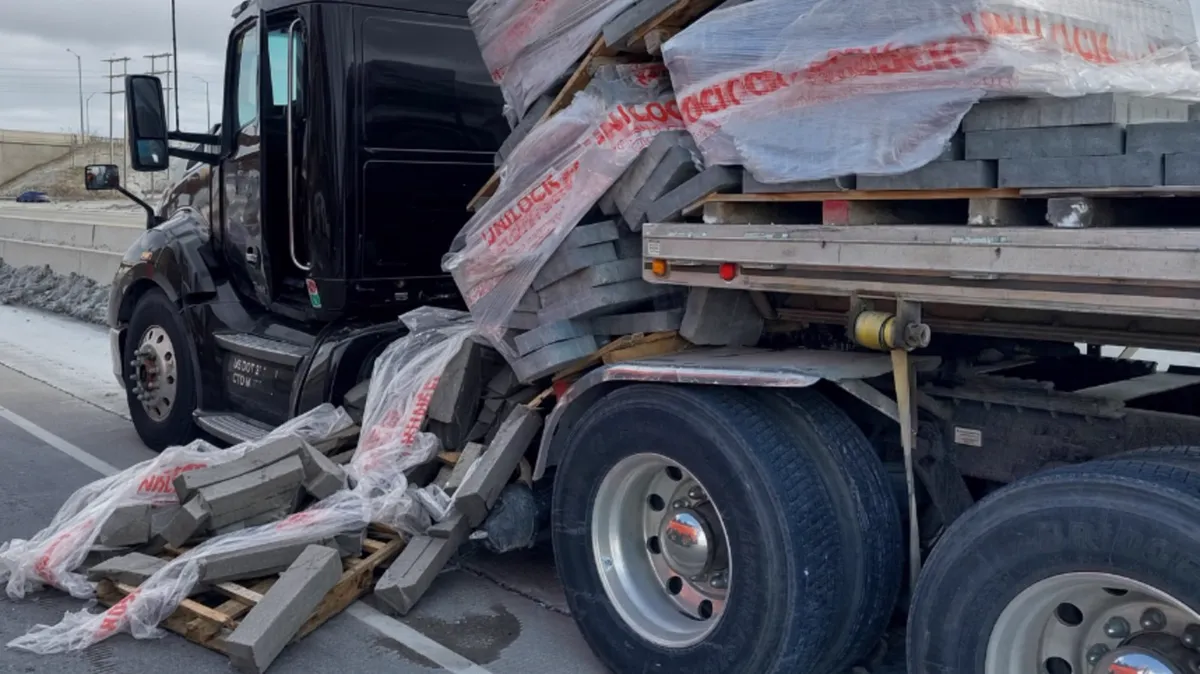
- What was the truck carrying, how was it loaded, and who loaded it?
- What braking, turning, or speed change came before the load moved?
- Where did the cargo shift or leave the vehicle, and where did it come to rest?
- What do the bill of lading, loading records, tiedown hardware, and inspection history each show about how the load was secured, and by whom?
- Scene Measurements
- Debris field, final cargo positions, and roadway geometry.
- Photographs and Video
- Scene photographs of straps, chains, blocking, and the trailer deck.
- Vehicle Condition
- Tiedowns, anchor points, headboards, and the trailer deck.
- Electronic Records
- Engine or event data may show the braking or steering inputs before the load shifted.
- Witness Accounts
- Accounts may describe when cargo moved or fell.
- Analyst Review
- A cargo-securement analyst may compare the method used against the federal cargo-securement rules (49 CFR Part 393, Subpart I).
Reconstruction Fact Categories
A reconstruction keeps three things apart: what was measured or recorded, what was assumed to fill a gap, and what is still unknown. Keeping them apart stops an assumption from being mistaken for a finding.
Recorded facts depend on records that expire. A motor carrier has to keep a driver’s records of duty status and supporting documents for six months, and inspection, repair, and maintenance records have to be kept for one year.
Rear-End
A reconstruction starts by fixing the setting before interpreting any movement. Relative movement tells more than any single snapshot.
Observed
- Physical marks and final positions documented at the scene
- Vehicle damage patterns consistent with a rear impact
Assumed Until Confirmed
- A continuous, unobstructed view for the following driver
- Steady speeds before braking unless evidence shows otherwise
Unknown Until Investigated
- When each driver first had an opportunity to respond
- What the following driver was doing in the seconds before impact
Lane Change
Lane geometry shapes which movements were possible. Mirror and camera coverage may bear on what the driver could see, and the contact location can distinguish merging from drifting.
Observed
- Damage location and direction on each vehicle
- Lane markings and merge geometry at the scene
Assumed Until Confirmed
- That equipment present was operational at the time
- A typical mirror arrangement unless documentation shows otherwise
Unknown Until Investigated
- Which vehicle initiated the lateral movement
- Whether an indicator was used and visible
Wide Turn
Tight geometry changes what a long vehicle must do. A tractor and its trailer follow different paths, and the trailer cuts inside the tractor’s path. That off-tracking is geometry, not fault by itself. Position over time tells more than position at one moment.
Observed
- Intersection measurements and any marks or debris
- The vehicle combination’s documented dimensions
Assumed Until Confirmed
- A representative turning path unless measurements show otherwise
- That equipment affecting the turn was in documented condition
Unknown Until Investigated
- Where the other road user was during each phase of the turn
- Which path choices were necessary given the geometry
Jackknife
Surface friction bounds what braking could accomplish. A jackknife is a loss of alignment during braking or slowing, not a single instant, so the sequence of braking and rotation is the core question.
Observed
- Documented marks and the vehicle’s final alignment
- Weather and surface observations recorded near the time
Assumed Until Confirmed
- A friction range for the surface unless testing supports a value
- Load position consistent with available documents
Unknown Until Investigated
- The exact sequence of brake application and rotation
- How load and surface interacted in this specific event
Rollover
Rollover analysis ties path and steering to the vehicle’s stability. Load position can shift the point at which rolling begins. The sequence is fixed from scene evidence.
Observed
- Scene marks, roadway geometry, and final rest position
- Documented load information where available
Assumed Until Confirmed
- A center-of-gravity estimate unless the load is documented
- A speed range unless electronic or physical evidence narrows it
Unknown Until Investigated
- The driver’s steering inputs in the seconds before the roll
- How the load was positioned and secured
Underride
Underride adds geometry questions to the movement questions. These events can involve a large speed difference or a turning truck. Contact sequence and guard condition are examined from measurements and damage.
Observed
- Damage patterns showing the contact sequence
- Documented condition of guards, lights, and markings
Assumed Until Confirmed
- Representative vehicle dimensions unless measured
- Lighting performance within documented condition
Unknown Until Investigated
- Exactly when each driver could first see the other vehicle
- How the speed difference developed before contact
Braking Event
Braking performance is a relationship between vehicle, surface, and conditions. The driver’s response pattern is itself evidence, and timing uncertainty is part of the analysis, not a flaw in it.
Observed
- Measured marks and documented brake condition
- Any electronic parameters recovered from this vehicle
Assumed Until Confirmed
- A friction value for the surface unless testing supports one
- That recovered timestamps are synchronized unless verified
Unknown Until Investigated
- The driver’s exact response timing
- How much of the stopping sequence the available data captures
Unsecured Load
Cargo type, weight, and the securement method set the starting point before any movement is interpreted. Cargo can shift under ordinary driving forces when securement is inadequate, so the maneuver and the securement are examined together. Debris position, strap and tiedown condition, and trailer damage are used to mark the sequence.
Observed
- Final positions of the cargo and any debris documented at the scene
- The condition of tiedowns, anchor points, and blocking recovered from the vehicle
Assumed Until Confirmed
- That the cargo weight matches the shipping paperwork unless it was verified
- That the securement seen after the accident matches how the load left the shipper
Unknown Until Investigated
- Who loaded and secured the cargo, and when it was last checked
- Whether the load shifted before or during the maneuver that preceded the event
More Trucking Accident Guides
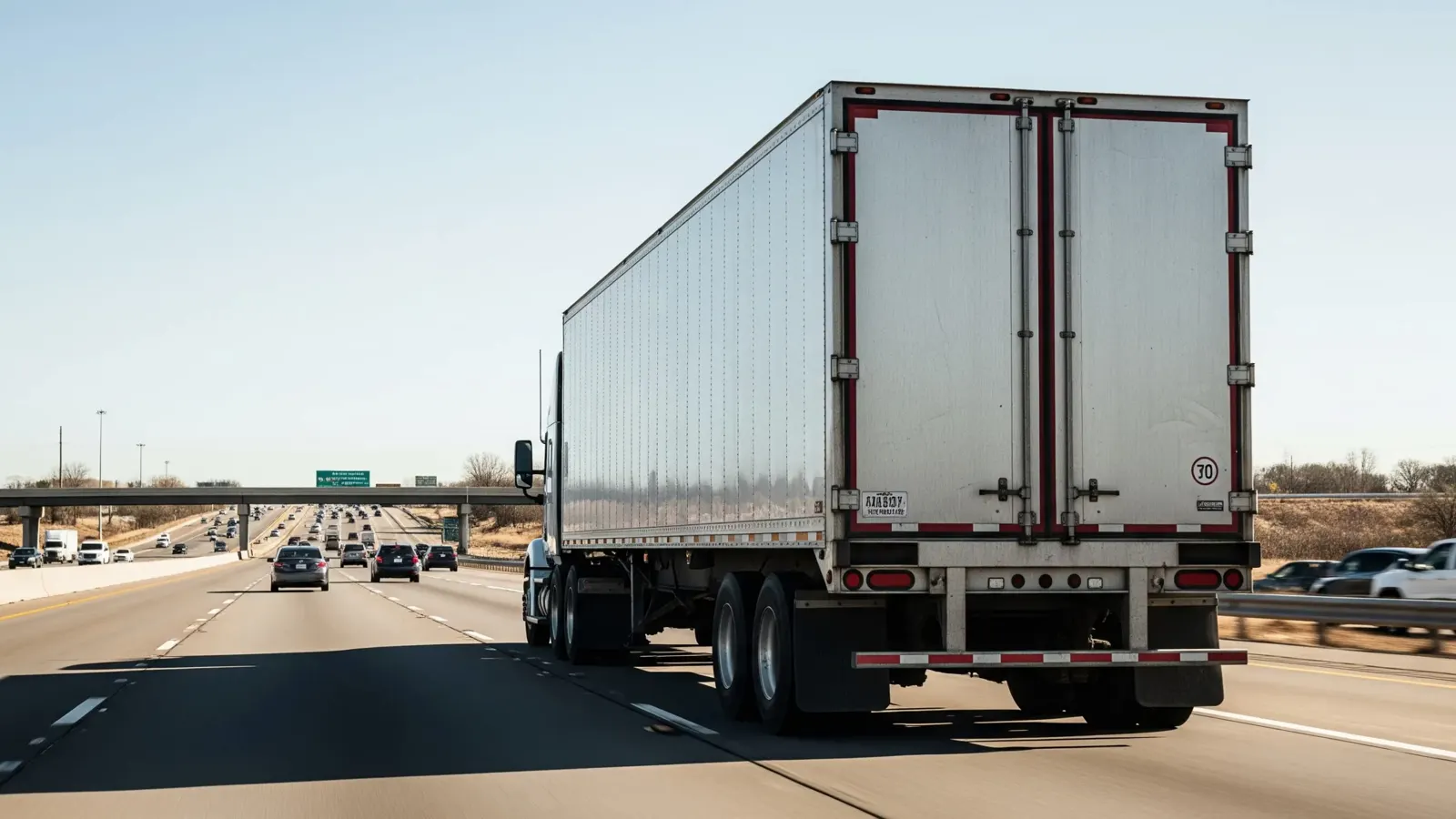
Federal Trucking Safety Regulations
Hours of service, driver qualification, maintenance, vehicle thresholds, FMCSA oversight, and record retention periods, with links to 49 CFR.
Commercial Truck Driver Fitness
Licensing, medical certification, background checks, and the fitness-to-drive rule in 49 CFR 392.3, with the records that show whether each was met.
Possible Defendants in a Truck Accident Case
Ten roles a truck accident investigation can examine, the questions to answer about each, and the records each one keeps.
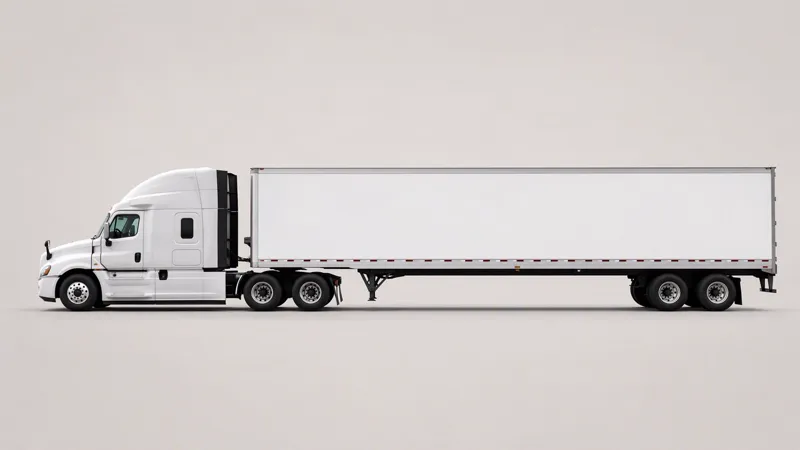
Truck Type Identifier
Twelve commercial vehicle types, the features that identify each one, and the records and questions that apply to it.
Injured in a Truck Accident?
Call us for a free case review.
Nothing on this page is legal advice, determines fault, or describes any real case. Illustrations are fictional and simulated.