
Possible Defendants in a Truck Accident Case
The defendants in a truck accident can include more people and companies than the name on the cab. The driver, the motor carrier, an equipment lessor, a broker, a shipper, a loader, a maintenance provider, a manufacturer, and a roadway contractor can each hold records about the trip.
Parties by Role
Select one or more roles on the map.
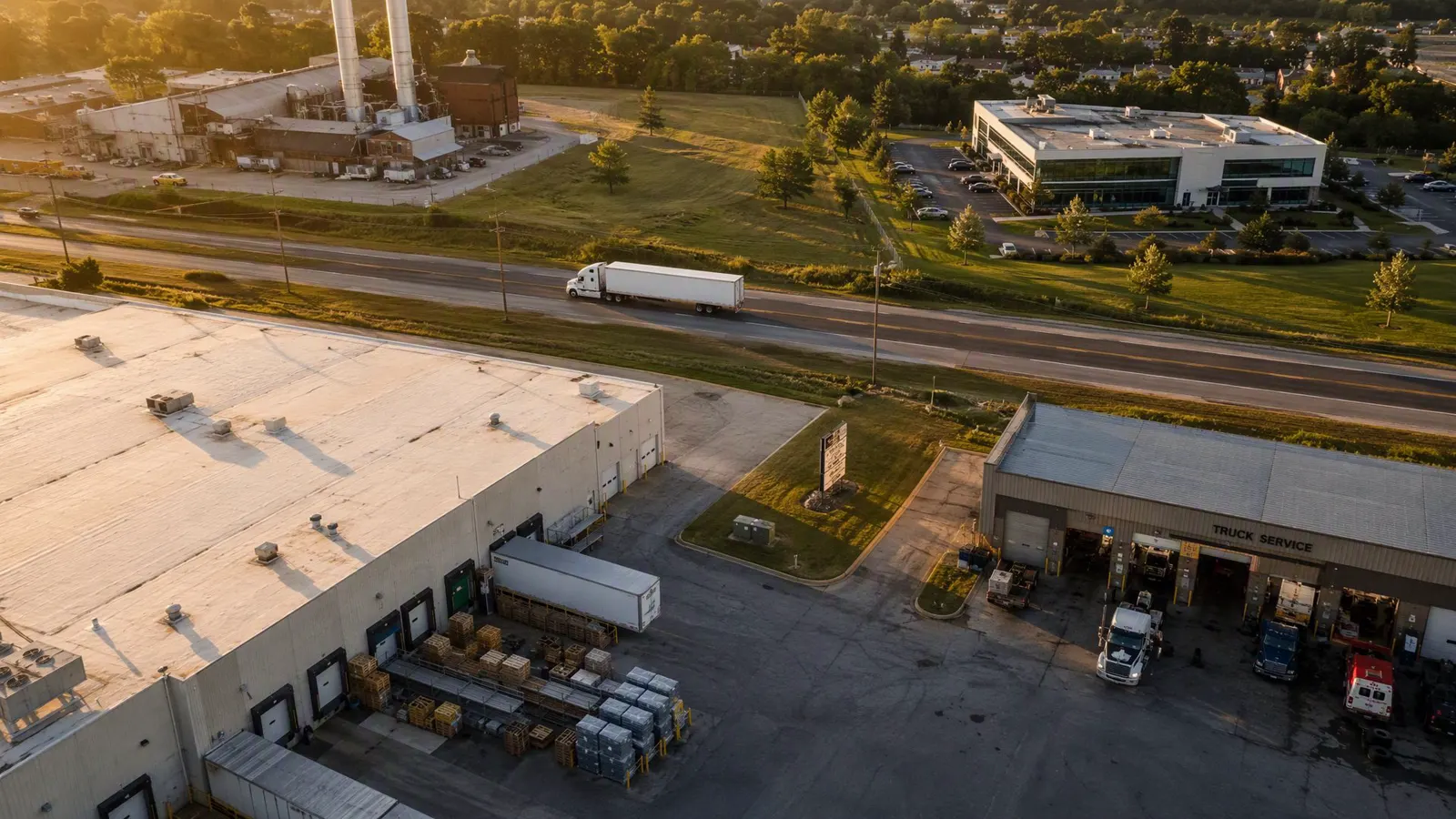
Driver
Operated the vehicle at the relevant time.
Questions to Answer
- Who operated the vehicle, and what was the driver doing?
- What do duty records and communications show about the trip?
- What statements exist about the driver’s actions?
Records to Request
- Duty records
- Communications
- Statements
Motor Carrier
The carrier whose operation dispatched and supervised the trip.
Questions to Answer
- Who dispatched the trip and supervised the operation?
- What policies governed the driver and the vehicle?
- What do qualification and maintenance records show?
Records to Request
- Dispatch records
- Policies
- Qualification records
- Maintenance records
Owner-Operator
Owned the equipment and operated under a lease or similar arrangement with a carrier.
Questions to Answer
- Who owned the equipment?
- What operating arrangement applied to this trip?
- Who controlled dispatch for this load?
Records to Request
- Lease
- Operating agreement
- Dispatch records
Equipment Lessor
Owned and supplied the tractor or trailer under a lease.
Questions to Answer
- Who owned and supplied the tractor or trailer?
- What condition reports exist for the equipment?
- How did the lease allocate responsibility?
Records to Request
- Lease
- Condition reports
- Responsibility allocation
Broker
Arranged transportation between a shipper and a carrier.
Questions to Answer
- Who arranged the transportation?
- What role did that entity undertake?
- What do the selection communications show?
Records to Request
- Brokerage agreement
- Tender documents
- Selection communications
Shipper
Prepared the shipment and communicated its requirements.
Questions to Answer
- Who prepared the shipment?
- What requirements were communicated, and to whom?
- What do the shipping documents show?
Records to Request
- Shipping documents
- Loading instructions
- Correspondence
Loader
Loaded or secured the cargo.
Questions to Answer
- Who loaded or secured the cargo?
- What loading records and photographs exist?
- What does the weight documentation show?
Records to Request
- Loading records
- Photographs
- Weight documentation
Maintenance Provider
Inspected, diagnosed, or repaired a relevant component.
Questions to Answer
- Who inspected, diagnosed, or repaired the relevant component?
- What work orders and inspection findings exist?
- What parts were replaced, and where are they?
Records to Request
- Work orders
- Inspection findings
- Parts records
Manufacturer
Designed or built the vehicle or a component.
Questions to Answer
- Is there an evidence-supported product issue to investigate?
- What exactly is the component, and who made it?
- What specifications and service information exist?
Records to Request
- Product identification
- Specifications
- Service information
Roadway Contractor
Designed, maintained, or controlled the roadway.
Questions to Answer
- Was roadway design, maintenance, or traffic control implicated?
- Who controlled the roadway at the relevant location?
- What plans and maintenance records exist?
Records to Request
- Plans
- Maintenance records
- Traffic control records
Unidentified Roles
Identification comes first: the vehicle markings, the accident report, and the trip records show who held each role.
Identification Questions
- Whose name and USDOT information appear on the vehicle and the accident report?
- Who arranged, loaded, and dispatched this particular shipment?
- What vehicles, companies, and insurance policies are connected to the trip?
Records to Request
- Accident report
- Photographs and video
- Witness information
- Vehicle identification
Federal Law by Role
| Role | Authority | Details |
|---|---|---|
| Broker | 49 CFR 371.2 | A broker arranges, or offers to arrange, transportation of property by an authorized motor carrier for compensation. A carrier arranging loads it is authorized to haul itself is not a broker under this definition. |
| Owner-Operator and Leasing Carrier | 49 CFR 376.12(c)(1) | The equipment lease must give the authorized carrier exclusive possession, control, and use of the equipment, and complete responsibility for its operation, for the duration of the lease. |
| Motor Carrier | 49 CFR 387.9 | A for-hire interstate carrier of nonhazardous property in a vehicle of 10,001 pounds or more must carry at least $750,000 in public liability coverage. Higher minimums of $1,000,000 and $5,000,000 apply to oil and hazardous materials. |
| Motor Carrier | 49 CFR 390.11 | Whenever the regulations place a duty or prohibition on a driver, the motor carrier must require the driver to observe it. |
| Any Person | 49 CFR 390.13 | No person may aid, abet, encourage, or require a motor carrier or its employees to violate the safety regulations. |
| Driver and Motor Carrier | 49 CFR 392.3 | A driver may not operate while impaired by fatigue, illness, or another cause, and a motor carrier may not require or permit it. |
| Driver and Motor Carrier | 49 CFR 392.9 | A driver may not operate, and a motor carrier may not require or permit a driver to operate, unless the cargo is properly distributed and adequately secured. |
| Loader | 49 CFR 393.100 | Each commercial motor vehicle must be loaded and equipped, and its cargo secured, to prevent the cargo from leaking, spilling, blowing, or falling, or from shifting enough to affect stability or maneuverability. |
| Maintenance Provider and Motor Carrier | 49 CFR 396.3 | A motor carrier must systematically inspect, repair, and maintain, or cause to be inspected, repaired, and maintained, every vehicle subject to its control, and keep records of that work. |
| Vehicle Rental Owner | 49 U.S.C. 30106 | A business that rents or leases vehicles is not liable under state law solely because it owns the vehicle, as long as the owner itself was not negligent and committed no crime. |
A duty in a regulation is a starting point for the investigation. Whether any person or company is legally responsible for an accident depends on the facts and on state law.
Frequently Asked Questions
Who is responsible for an owner-operator’s truck while it is leased to a trucking company?
Federal leasing rules require the lease to give the authorized carrier exclusive possession, control, and use of the equipment, and complete responsibility for its operation, for the duration of the lease, under 49 CFR 376.12(c)(1). The lease is a record to request early, and the carrier name and USDOT number shown on the truck are details to document.
What is the minimum insurance a trucking company must carry?
For a for-hire interstate carrier hauling nonhazardous property in a vehicle of 10,001 pounds or more, the federal minimum is $750,000 in public liability coverage. The minimum rises to $1,000,000 for oil and for listed hazardous materials outside the $5,000,000 classes, and to $5,000,000 for specified bulk hazardous materials, under 49 CFR 387.9. A company can carry more than the minimum.
What is the difference between a broker and a motor carrier?
A motor carrier transports the freight. A broker arranges, for compensation, for an authorized motor carrier to transport it, under the definition in 49 CFR 371.2. The broker’s load confirmation, rate agreement, and carrier selection records show how the trip was arranged.
Which federal rules govern how cargo is loaded and secured?
The cargo securement standards begin at 49 CFR 393.100 and continue through 393.136. 49 CFR 392.9 bars driving a truck unless its cargo is properly distributed and adequately secured.
More Trucking Accident Guides
Federal Trucking Safety Regulations
Hours of service, driver qualification, maintenance, vehicle thresholds, FMCSA oversight, and record retention periods, with links to 49 CFR.

Commercial Truck Driver Fitness
Licensing, medical certification, background checks, and the fitness-to-drive rule in 49 CFR 392.3, with the records that show whether each was met.
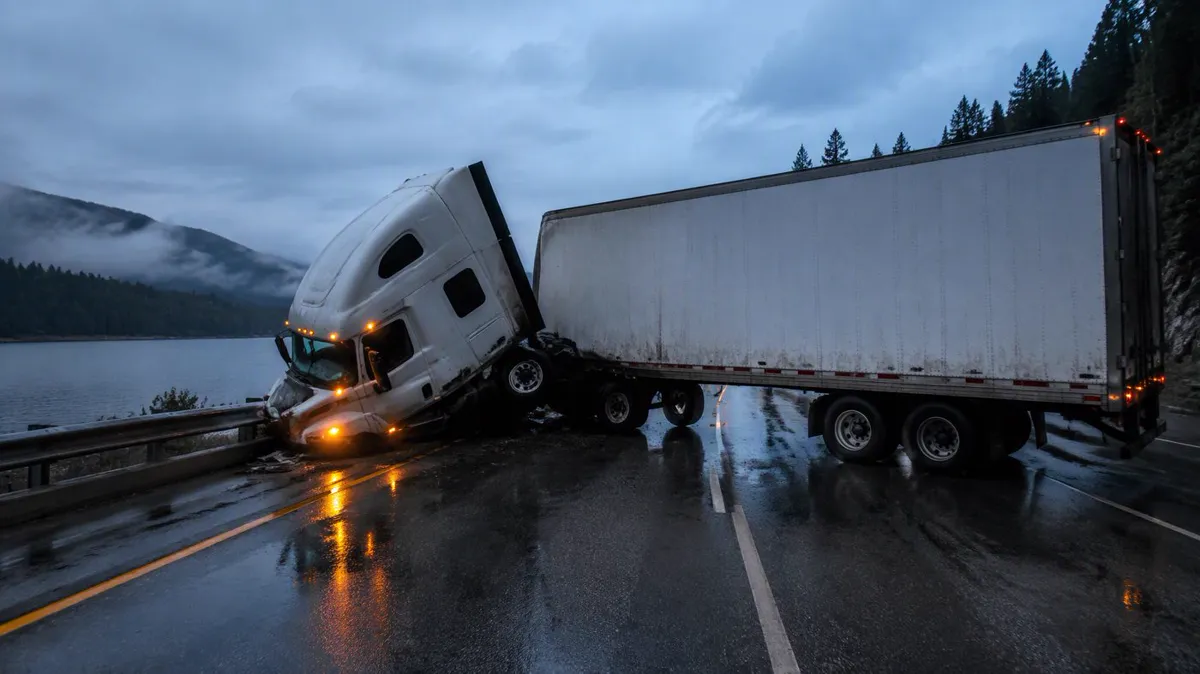
Truck Accident Investigations
Eight accident types, the questions a reconstruction asks about each, and what scene measurements, video, vehicle condition, and electronic records can show.
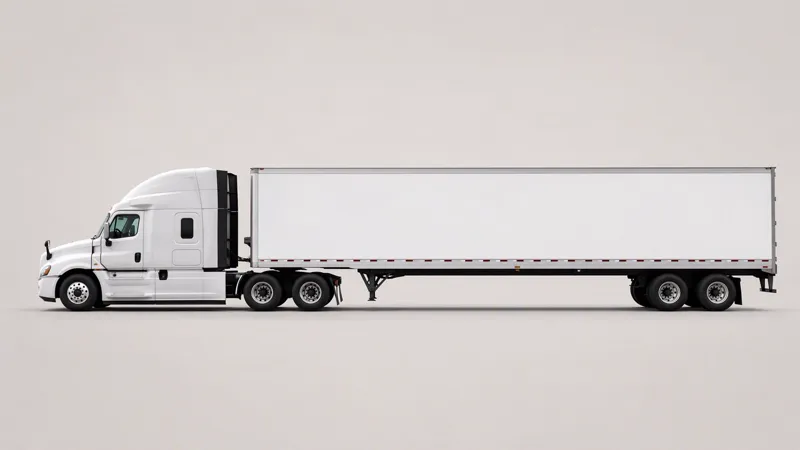
Truck Type Identifier
Twelve commercial vehicle types, the features that identify each one, and the records and questions that apply to it.
Injured in a Truck Accident?
Call us for a free case review.
Nothing on this page is legal advice, determines fault, or describes any real case. Illustrations are fictional and simulated.